
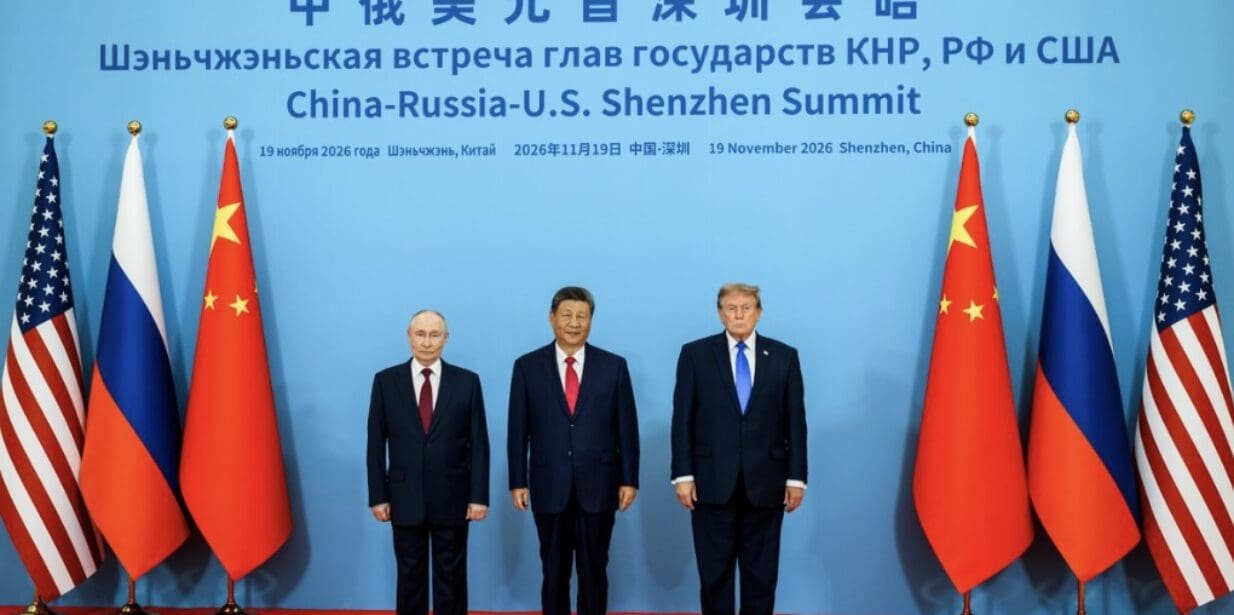
Their four-point declaration also called for reforming the United Nations, increasing the supply of refined petroleum products, and reining in what the leaders described as overreach by the International Criminal Court. The visit produced no announced breakthrough on Ukraine and no new U.S.–China trade deal.
Trump opened a three-way channel on nuclear risk. Xi got to play host and power broker, and Putin got the image he wanted of Russia standing alongside the United States and China. The trip’s lasting significance will depend on whether those nuclear talks lead to concrete commitments.
In one of the key takeaways from their historic meeting in Shenzhen, China. President Trump, Xi Jinping and Vladmir Putin agreed: As part of a four-point “declaration toward peace” released after Thursday’s summit, Trump, Putin and Xi agreed to participate in an ongoing dialogue on nuclear nonproliferation.
“The three heads of state reaffirmed that a nuclear war cannot be won and must never be fought. The three countries will conduct a dialogue on reducing nuclear risks and preventing the proliferation of nuclear weapons,” the three leaders said in the joint statement.
The U.S., China and Russia are the world’s largest nuclear powers (The Hill). The verbal assent to the horror of nuclear war is admirable. But we should not be naïve: Dennis Wilder, a former head of China analysis at the CIA, welcomed Trump’s focus on nuclear weapons but cautioned that there was almost no chance of any real progress on the issue. “Trump’s appeal to Xi and Putin for nuclear arms reduction talks almost certainly fell on deaf ears,” said Wilder. “Beijing’s clear goal is to achieve parity in deployed nuclear warheads with Washington and Moscow before joining any nuclear force reduction talks” (Financial Times).